If the tire on your car gets punctured, you might be stuck waiting at the maintenance shop for around an hour for the hole to be patched. But, if one of your $30,000 heavy duty earthmoving tires develops a hole, you’re going to be waiting much longer.
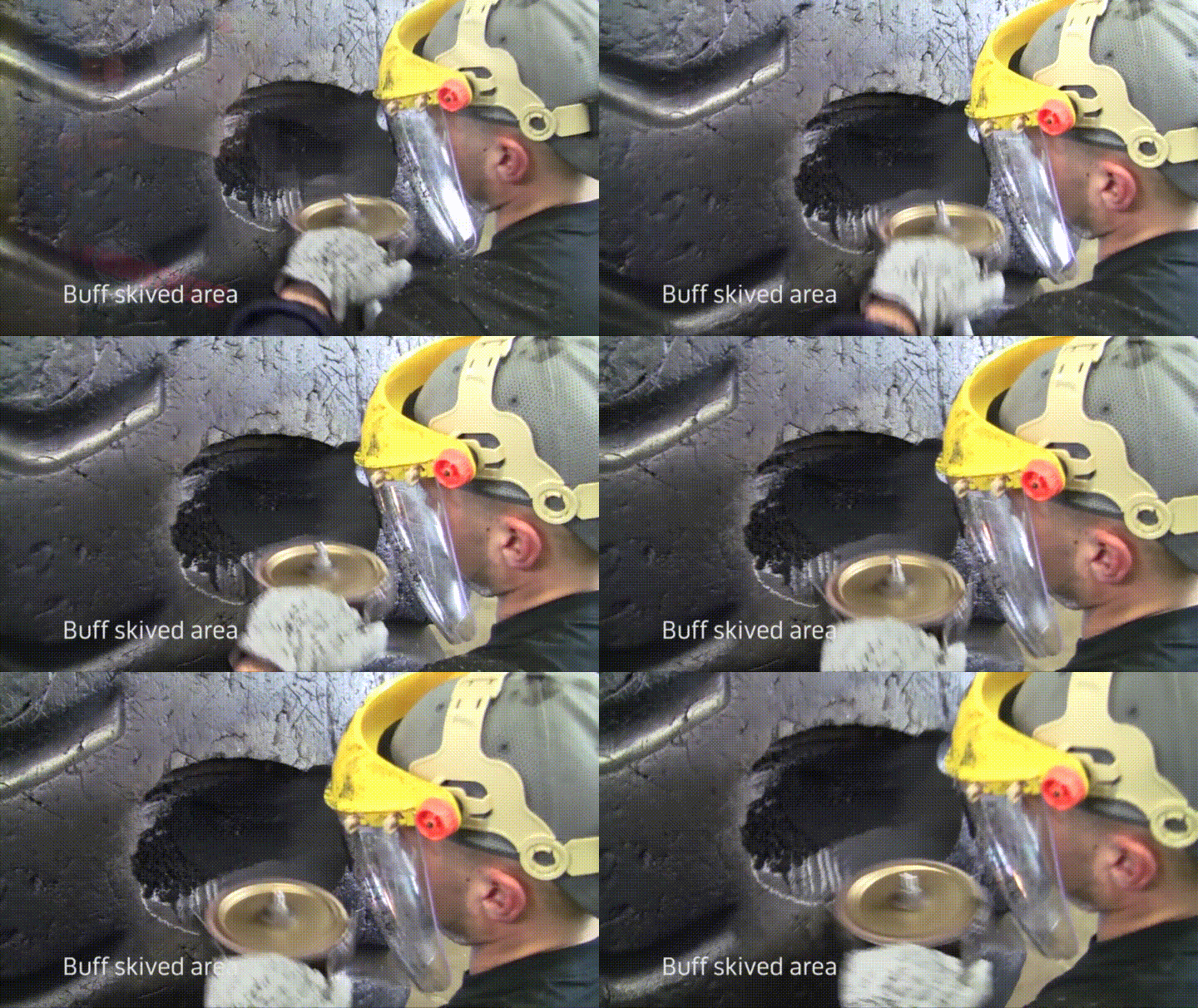
The video below shows the entire process of repairing a relatively small laceration in an earthmoving tire, using a process created by REMA TIP TOP. REMA supplies automotive and industrial products, including the OTR Tire Retread Product, highlighted in the video, which are made in the company’s Madison, GA plant.
As you’ll see, the repair requires a heck of a process to complete, which starts by making the small hole into a large crater. After the patch is cut in and applied, a series of taping, gumming, and stitching techniques keep the patch in place. It’s a long and tedious process that clearly requires a lot of precision and quality, so we can take solace in that fact that we’re not the ones that have to do the work. There is a significant part of the tire repair process that was cut out of the video, however, which is the vulcanization process, which hardens the rubber by heating it at high temperatures with sulfur.
If you’re interested in some general best practices for maintaining your large equipment tires, OTR Tires provided some good tips on their website. Many of the tips, like checking tire pressure regularly, checking tread depth, and avoiding potholes, are pretty obvious, but others are good reminders. Maintaining proper speed, for example, isn’t just a good practice for safety, each tire also has a recommended speed limit that should not be topped. If you’re storing your tires, make sure it’s for no longer than 90 days and in an area that does not get extremely hot or cold.







While still new in the construction industries, robots are typically designed to perform a specific task in a highly precise and efficient way, like the rebar tying robot, Tybot or the brick-laying robot Hadrian X. More recently, though, robots are being imagined as platforms for 3rd party companies to develop hardware and accessories to attach to the base robot, like the Boston Dynamics robotic dog, Spot. I recently came across a new robot, called Baubot, which hopes to one day perform tasks using every tool on a typical jobsite.