Wind has been used for over a thousand years, with the first known windmill built between 500-900 AD in Persia (known as Iran, today). For centuries to come, wind would be used to power grain mills and scoop up water out of a river or stream. Surprisingly, the first windmill, or wind turbine, to actually produce electricity was built way back in 1887 in Scotland. Inventor James Blyth used the turbine to power his vacation home.
Now, wind turbines for electricity are slowly gaining in popularity, but the race is on to see who can make them more and more efficient. Just like solar power, not all of the energy gained from wind can be used.
How do Wind Turbines Work?
Wind turbines are obviously more suitable to windy environments, as it uses the wind to turn its blades. The blades typically rotate at 18 RPM, which is pretty slow, so a series of gears are installed inside the shaft that rotate at 1800 RPM. Those gears then power a generator, which begins to create electricity. The video below gives great information for those looking to learn more about how wind turbines work.
Locogen Wind Turbine Timelapse
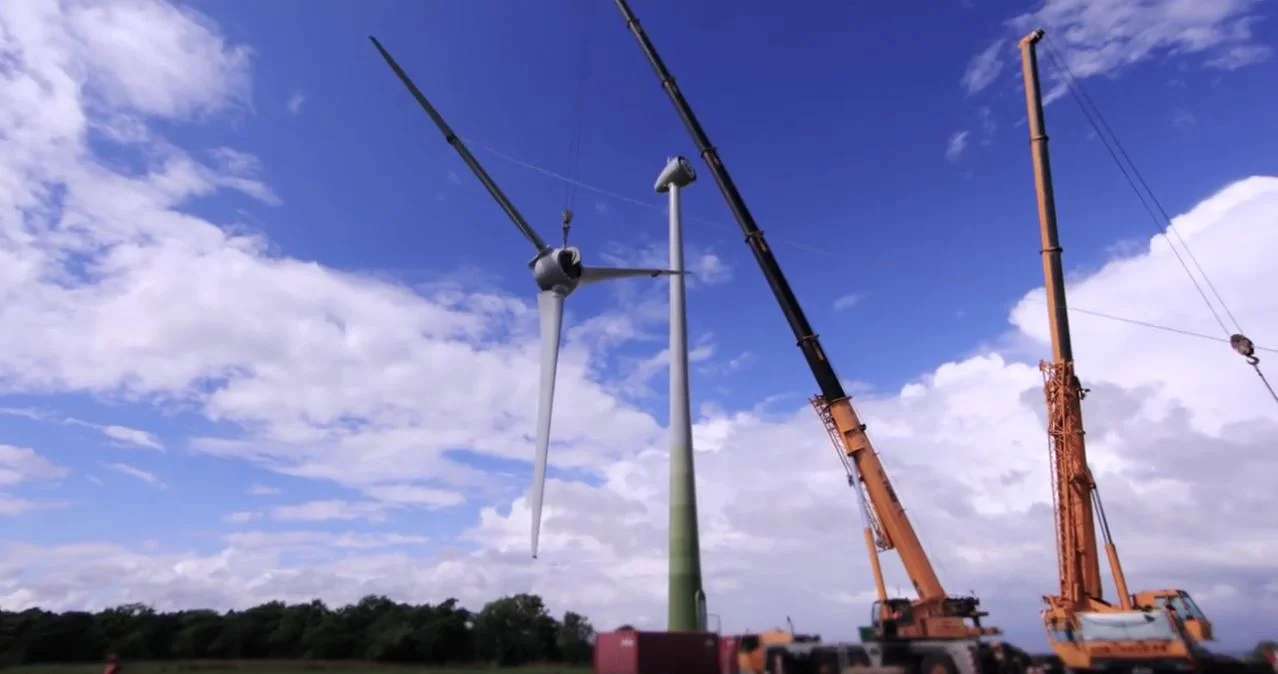
Now, for the main attraction. The 330KW wind turbine in North Ayrshire, Scotland. The structure stands 200 feet high (61m) and is Locogen’s Enercon E33 turbine. In the video, you’ll see the entire construction process, from beginning to end and it’s filmed up close, so you can see pretty much every detail. Typically, timelapse videos only show an overview of the entire site, so you can barely tell what’s actually being done, so it’s nice to see a company take a different approach.






While still new in the construction industries, robots are typically designed to perform a specific task in a highly precise and efficient way, like the rebar tying robot, Tybot or the brick-laying robot Hadrian X. More recently, though, robots are being imagined as platforms for 3rd party companies to develop hardware and accessories to attach to the base robot, like the Boston Dynamics robotic dog, Spot. I recently came across a new robot, called Baubot, which hopes to one day perform tasks using every tool on a typical jobsite.